
Digital PR for AI Search: Build Evidence Worth Citing
Plan digital PR for AI search using original evidence, clear methodology, honest distribution, and measurement that separates coverage from citations.

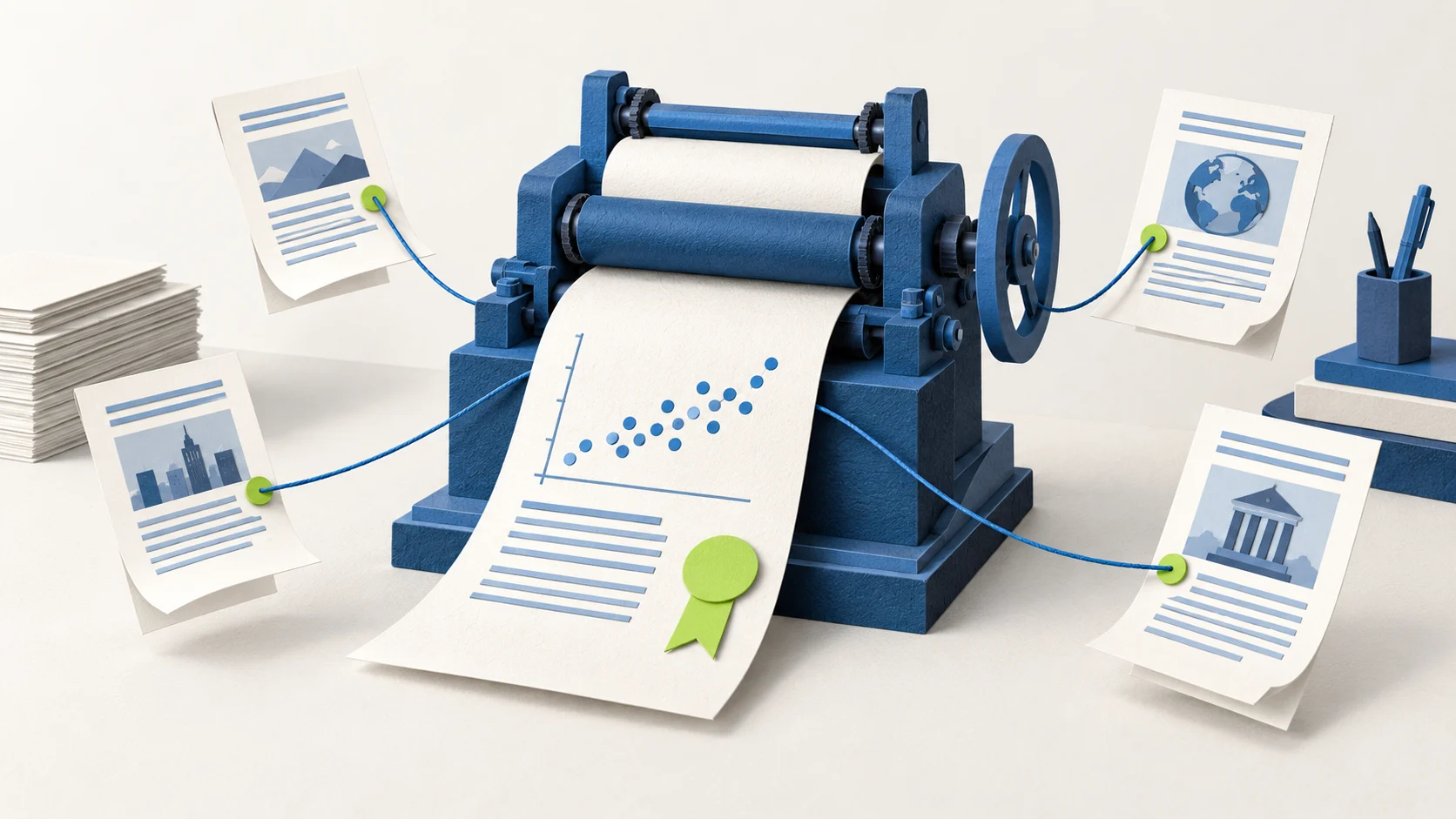
Digital PR for AI search should begin with evidence that someone else has a reason to reference: a useful dataset, a documented experiment, a substantive product announcement, or informed analysis with a clear basis.
Distribution helps people discover that evidence. It does not turn a weak claim into a reliable one, and a syndicated press release is not the same as independent editorial coverage or an AI citation.
This guide shows how to plan an evidence-led campaign, package its findings, and measure the result without conflating those different outcomes.
PR evidence and AEO delivery work best together. If AEOFAST is part of your managed AEO delivery, share the source page and its claim boundaries as briefing material, and agree on the exact questions and the evidence required to document any observed result.
Choose a finding before choosing a headline
A strong starting question is: what can our organization learn or demonstrate that would help this audience make a decision?
Possible assets include:
- Aggregated, appropriately anonymized observations from your own operations.
- A reproducible benchmark with a documented test environment.
- A survey with a clearly described sample and questionnaire.
- A public resource that makes a difficult comparison easier.
- A product change with specific, verifiable implications for customers.
Avoid inventing a statistic because a headline would sound stronger with a percentage. Also avoid dressing up a small convenience sample as a market-wide study.
For an illustrative campaign, imagine an agency auditing the clarity of appointment information on 40 local service websites. That could support a narrow report about the sites reviewed. It would not establish how all local businesses behave.
Write the methodology before collecting the data
A short protocol reduces the temptation to change definitions after seeing the results.
| Protocol field | Example for the fictional audit |
|---|---|
| Research question | Can a visitor find the information needed to request an appointment? |
| Sample selection | Forty sites selected using a documented list and eligibility rule |
| Unit of analysis | One business website, not each individual page |
| Observation date | Defined collection window |
| Checks | Booking route, service area, hours, and fee explanation |
| Definition of “present” | Information accessible through specified navigation steps |
| Review process | Second reviewer checks disputed or ambiguous cases |
| Exclusions | Duplicates, inaccessible sites, and businesses outside scope |
| Limitations | Convenience sample; no claim of market representativeness |
Save the actual collection sheet and a data dictionary. Record missing observations instead of silently counting them as failures or successes.
If the research uses sensitive business or customer data, obtain the appropriate internal approval before collection or publication. A useful public finding does not require exposing identifiable customer records.
Show the denominator beside every percentage
Suppose the fictional exercise found a fee explanation on 18 of 40 sites. You can illustrate the calculation as 18 ÷ 40 × 100 = 45%.
The responsible sentence would be:
In this hypothetical example, 18 of the 40 reviewed sites included a fee explanation under the audit’s definition.
It would not be:
Most local businesses hide their fees.
The second version invents motive and generalizes beyond the sample. Both problems remain even if the arithmetic is correct.
For real research, disclose enough of the protocol that a reader can understand what the number means. If the finding depends on a subjective judgment, explain the rubric and how disagreements were resolved.
Make the evidence easy to cite
Research on generative engines supports the instinct to lead with evidence. The GEO paper that named the field found that adding citations, relevant quotations, and statistics made sources noticeably more visible in generated answers, while keyword stuffing did not help. A PR asset is, almost by definition, a page full of statistics and attributable statements, so its packaging matters.
Several low-effort additions make the research easier for journalists, readers, and answer systems to use correctly:
- A “how to cite this research” block with the title, organization, publication date, and canonical URL. It reduces misattribution and points citations at the source page rather than a syndicated copy.
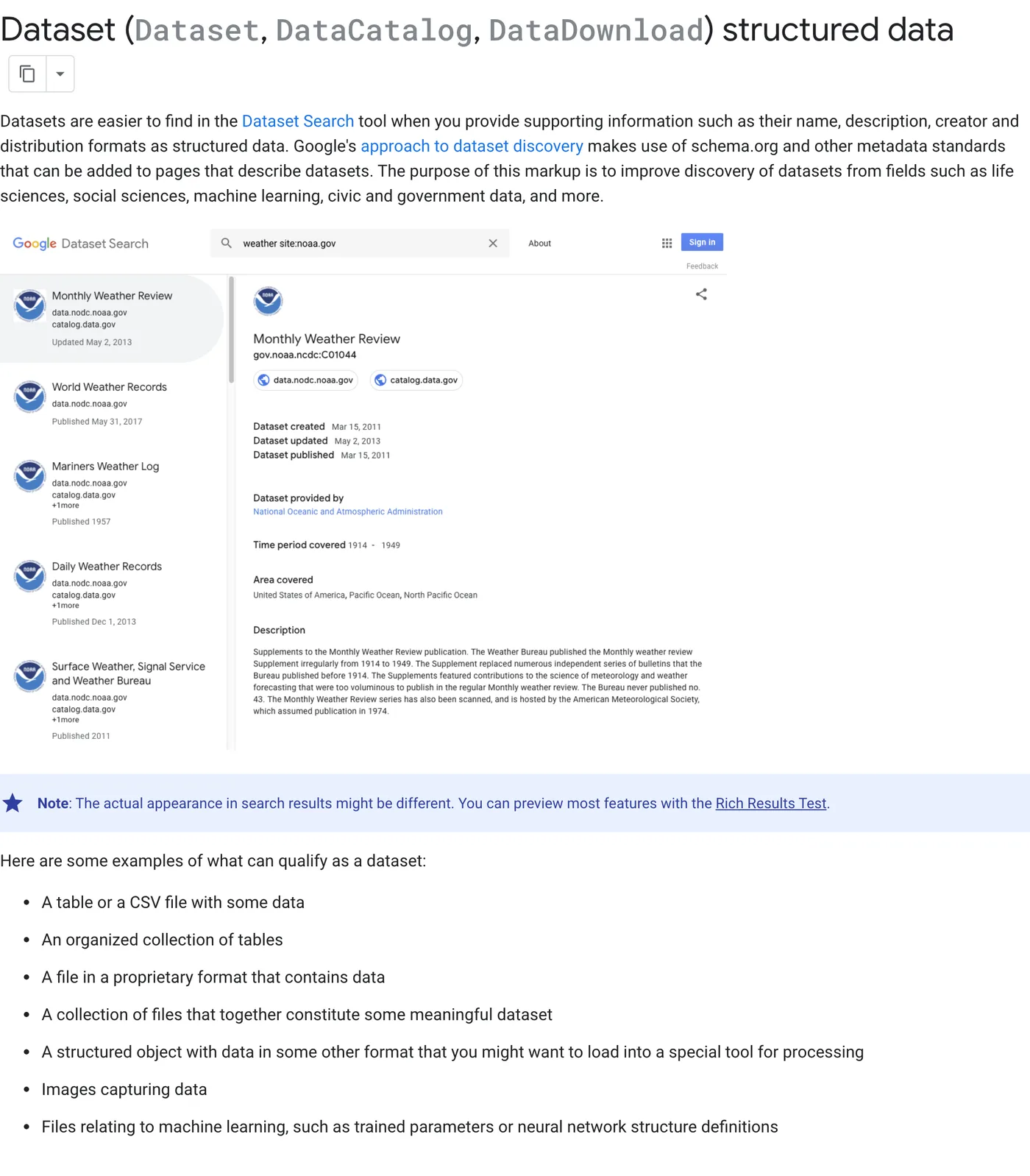
- A downloadable dataset in CSV or a similar open format, with a data dictionary. Google’s Dataset structured data documentation explains how name, description, creator, and distribution formats help datasets appear in Google’s Dataset Search tool.
- Charts with credit and license metadata. Google’s image license metadata can make an image eligible for a Licensable badge that links to the license and credit information. That gives anyone reusing a chart a clear, attributable route back to you.
- One quotable sentence per finding, written with its denominator and scope intact, so that the easiest sentence to copy is also the accurate one.
Publish a durable source page
Give the research a stable home on your own site before promoting it. Include:
- A concise description of the finding and its practical implication.
- Collection dates, sample definition, and methodology.
- Tables or charts with explicit units and denominators.
- Important limitations and alternative explanations.
- Access to an appropriate public dataset or supporting detail.
- A named contact or accountable editorial owner.
- A correction and update record when material facts change.
A press release can summarize the news, but the underlying source page should carry the full explanation. If someone quotes a chart, they should have somewhere to check its meaning.
Use the AEO content brief to align the headline, claims, and evidence before drafting promotional copy.
Separate distribution from editorial endorsement
MarketersMEDIA provides press release distribution. It can be a channel for announcing a substantive finding and linking readers to the source material. Distribution should be evaluated on its actual deliverables and suitability for the audience.
Maintain separate labels in your campaign record:
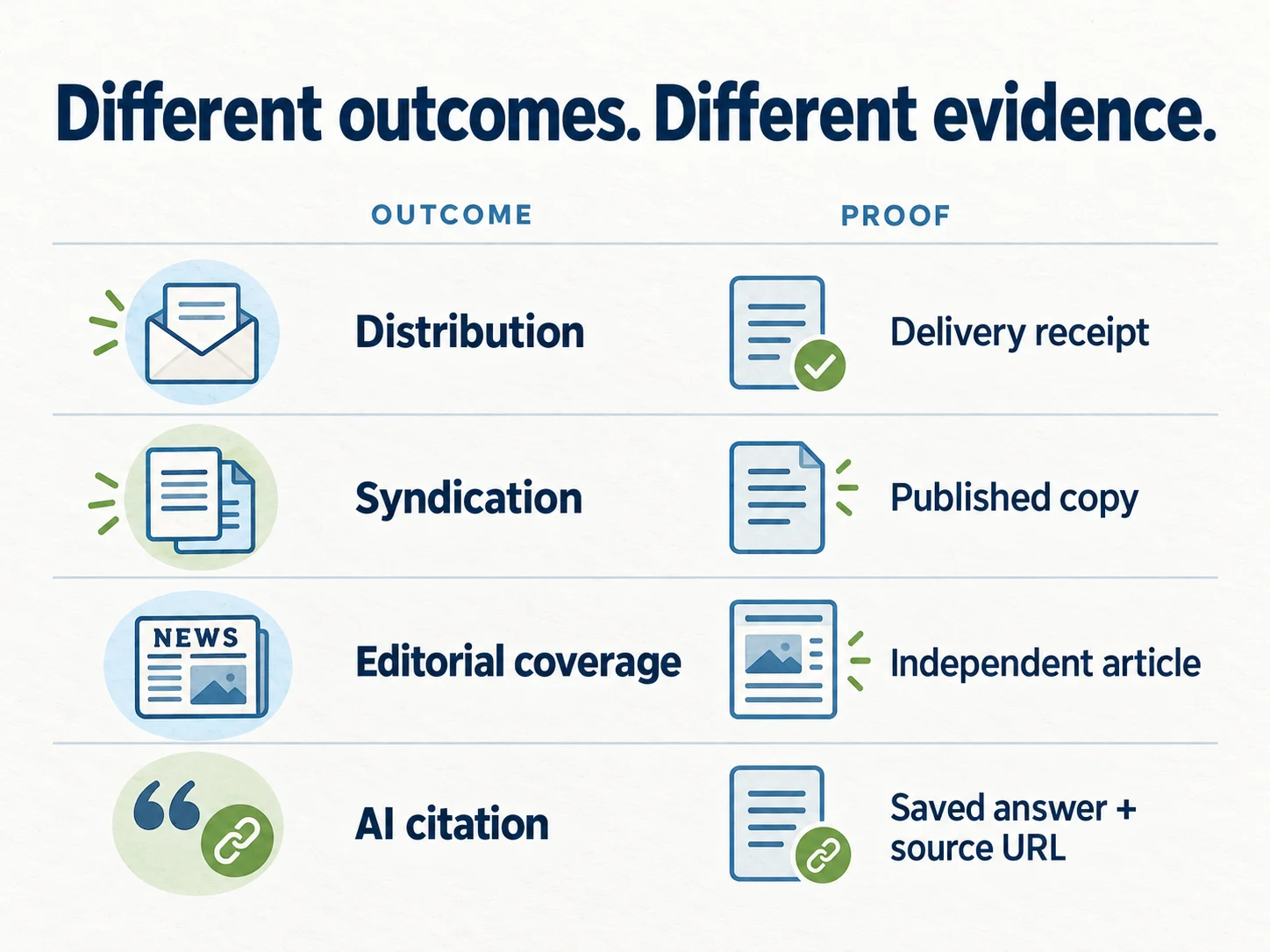
| Outcome | What it establishes | What it does not establish |
|---|---|---|
| Release distributed | The service completed the agreed distribution action | Independent endorsement |
| Syndicated copy published | Another destination carries the release | Original reporting or incremental audience quality |
| Journalist cites the research | An editorial article references the work | Agreement with every company claim |
| AI answer links to the source | A sampled response used that URL as a citation | Stable inclusion across users or future responses |
| Qualified enquiry arrives | A potential customer took a useful action | Causation by the campaign without attribution evidence |
This makes the report more useful to a client or executive. Ten copies of the same release can be legitimate distribution outputs, but they should not be presented as ten independently researched endorsements.
SEOPressor’s existing press release distribution and AI citation guide discusses service selection. Use this article to design the underlying evidence and reporting discipline before choosing a channel.
Pitch the implication, with the limitations intact
An editorial pitch should explain why the finding matters to the outlet’s readers. Give the reporter a concise result, access to the methodology, and a qualified person who can answer follow-up questions.
For the fictional appointment audit, a useful angle might be the specific information a customer needs before booking. An unsupported claim that a new AI era has made every business obsolete would distract from the actual research.
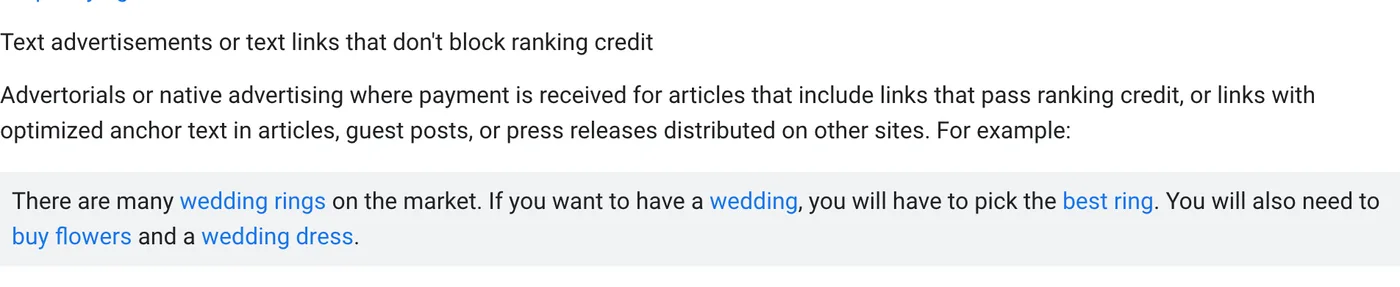
Do not demand an exact-match anchor or editorial wording as the price of access to data. Where placements are paid or sponsored, label and qualify them appropriately. Google’s spam policies address links created to manipulate rankings, including certain advertorial and distributed press-release link practices.
The policy wording is specific. Google’s link-scheme examples include “advertorials or native advertising where payment is received for articles that include links that pass ranking credit, or links with optimized anchor text in articles, guest posts, or press releases distributed on other sites.” Paid and sponsored links are acceptable when they are qualified with rel="sponsored" or rel="nofollow".
Google has also widened the scope. Its spam policies now state that they cover attempts to manipulate generative AI responses in Google Search, not only rankings. Its guide to optimizing for generative AI search adds that seeking inauthentic mentions across the web “isn’t as helpful as it might seem”, because its core systems focus on quality while other systems block spam. A campaign built to manufacture mentions rather than earn them is now a policy risk in AI answers as well as in classic results.

The purpose of the evidence page is to be useful and attributable, not to conceal a link arrangement.
Connect the campaign to a defined question set
Before distribution, select the relevant questions whose answers could reasonably use your evidence. A report on appointment information might support questions about evaluating a service website. It may have little relevance to a question asking which repair provider to book tomorrow.
Save a baseline for those questions. After publication and distribution, repeat the same observation method and inspect the actual linked sources. Track whether the research, release, editorial coverage, or some unrelated page was cited.
First-party data can help here. Bing Webmaster Tools’ AI Performance report lists citation counts by page, so you can see whether the research page itself is being cited across Copilot and Bing’s AI summaries. Google’s Generative AI performance report in Search Console shows impressions for the page in AI Overviews and AI Mode. Neither shows syndicated copies on other domains, which is another reason to keep the canonical source on your own site.
If a managed AEO service is part of the delivery, as described at the start of this guide, give it the source page, the claim boundaries, and the question set. A brand mention without a link to the research is a different outcome from a citation to the study.
Use a report that exposes uncertainty
Your final report should show the published asset, distribution receipts, distinct editorial coverage, sampled AI citations, referral visits, and qualified enquiries as separate rows.
Add notes about confounding events. A simultaneous product launch, seasonal demand increase, paid campaign, or website migration can affect the same numbers. Without a stronger experimental design, describe a change as an observed association rather than a proven causal lift.
The AI visibility measurement guide provides definitions for the answer-level metrics.
The most defensible digital PR asset is one you would still be comfortable publishing if it produced no backlink. If the evidence helps the audience, withstands questions, and remains available for checking, distribution has something worthwhile to amplify.
Questions teams commonly ask
Does a press release link still help SEO?
Distributed press releases are mainly a discovery and announcement channel. Google’s spam policies specifically list optimized anchor text in distributed press releases as a link-scheme example, so treat any link value as incidental and qualify links appropriately.
How large does a sample need to be for a PR study?
Large enough for the claim you want to make. A narrow, honest claim about 40 reviewed sites is defensible; a market-wide claim from the same sample is not. Report the denominator and, for percentages, consider giving a confidence interval, as explained in our AI visibility measurement guide.
Should we gate the full report behind a form?
Gating can generate leads, but a gated PDF is weak evidence for crawlers and journalists who need to check a claim. Publish the key findings, methodology, and charts openly on the source page, and gate optional extras if you need to.
Keep reading
More Off-page SEO
How to Get Cited by AI Search: Your Website Is Only Half the Strategy
Most advice about earning citations in AI search starts with your own website. Add concise answers beneath your headings. Improve crawlability. Use…
How To Do Negative SEO Attack (And How To Defend Against It)
Negative SEO is the act of using Black Hat SEO on other websites in order to get them penalized by Google. Learn more on how to defend against Negative SEO
4 Types Of Links That Matter For SEO
Links are not as simple as they look, redirecting readers from one place to another. Links have their own names and benefits. Here are 4 types of links that matter for SEO.